Quick Summary & Key Takeaways
- Insightful Resource: A detailed guide exploring Unlock The Power Of Voice: Mastering The Active To Passive in depth.
- Step-by-Step Walkthrough: Detailed sections covering practical applications and common practices.
- High-Value Content: Curated layouts designed to provide maximum clarity and structured learning.
The Foundations of Active and Passive Voice
Understanding the nuances of voice in language is crucial for effective communication, and Mastering The Active To Passive Voice Shift A Complete Guide is the key to unlocking this skill. At its core, the distinction between active and passive voice lies in how the subject of a sentence performs or receives the action described by the verb. Active voice occurs when the subject performs the action, whereas passive voice is used when the subject receives the action. This fundamental difference significantly impacts the clarity, tone, and overall impact of one's writing or speech.
A thorough comprehension of both voices allows writers and speakers to convey their messages with precision and intention, adapting to the context and audience. For instance, in scientific writing, the passive voice is often preferred because it emphasizes the experiment or the findings rather than the researcher, lending an air of objectivity. On the other hand, active voice can create more engaging and dynamic storytelling in fiction by directly involving the reader with the actions of the characters.

The Art of Shifting Between Voices
Mastering the shift between active and passive voice requires practice and a keen sense of when each is appropriate. Mastering The Active To Passive Voice Shift A Complete Guide can offer invaluable insights into this process. One of the key challenges is recognizing the contexts in which the passive voice is not just acceptable but preferable. For example, in formal or technical writing, using the passive voice can improve clarity by focusing on the action rather than the doer. Conversely, in personal narratives or persuasive writing, the active voice can be more effective for creating a sense of agency and urgency.
- •Mexican Drug Cartels Vs Military: A Deep Dive Into The Violent Confrontations
- •Unlocking Seamless Transactions: A Comprehensive Guide To Mandiri Ke Dana Minimal Transfer
- •Mastering Household Responsibilities: A Simple Guide To Saying Chores Or Tasks In Spanish
- •London Boy Takes Over The Internet: Unveiling The Viral Sensation Lmzh
- •Unveiling The Courageous Life Of Catherine Yoon Dilanian: A Pioneering Journalist's Legacy
Furthermore, understanding how to convert sentences from active to passive voice (and vice versa) is an essential skill. This involves identifying the subject and verb in the sentence and rearranging them according to the voice desired. For instance, the active voice sentence "The chef cooks the meal" can be transformed into the passive voice sentence "The meal is cooked by the chef." This ability to shift voices at will enables writers to vary their sentence structure, maintaining reader interest and enhancing the overall flow of the text.
Practical Applications and Benefits
The practical applications of mastering the active to passive voice shift are vast and varied. In academic writing, for example, the ability to use both voices effectively can significantly enhance the quality of research papers and essays. Similarly, in professional communication, understanding how to choose the most appropriate voice for the situation can improve the clarity and impact of messages, whether in emails, reports, or presentations. Mastering The Active To Passive Voice Shift A Complete Guide can provide learners with the tools and confidence to apply these principles in real-world contexts.
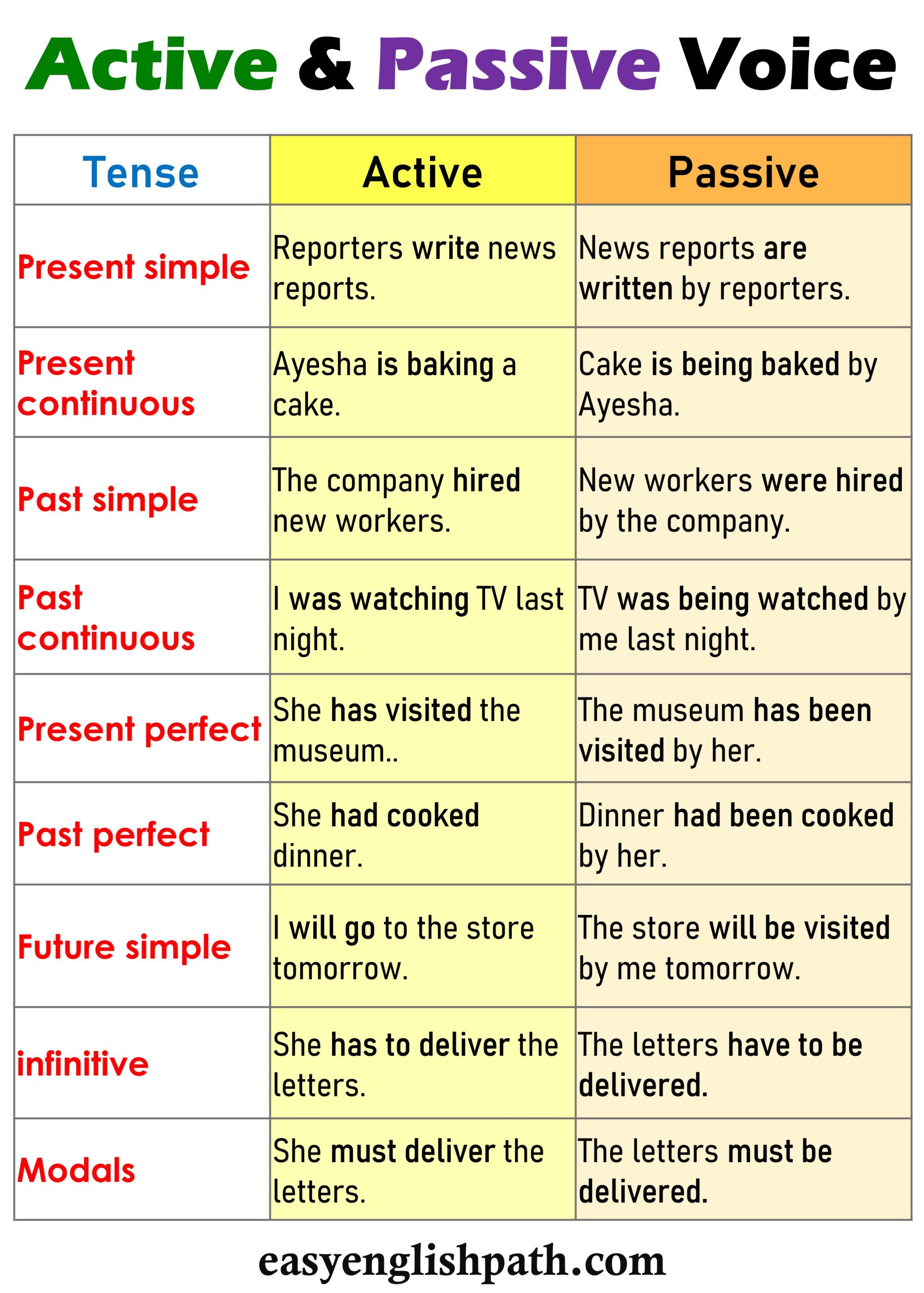
Conclusion: Mastering Voice for Effective Communication
In conclusion, Mastering The Active To Passive Voice Shift A Complete Guide is an indispensable resource for anyone seeking to refine their writing and speaking skills. By understanding and mastering the active to passive voice shift, individuals can significantly enhance their ability to communicate effectively, adapting their message to the audience and context with ease and precision. Whether in personal, academic, or professional settings, the power to choose the most effective voice can make a profound difference in how messages are received and interpreted.
To explore further academic studies and guidelines, refer to search results on Official Academic & Government Portals.


